Sony’s Soneium Netwok Monthly Active Addresses Surge 10X in 90 Days

0 0
Read Time:1 Minute, 0 Second

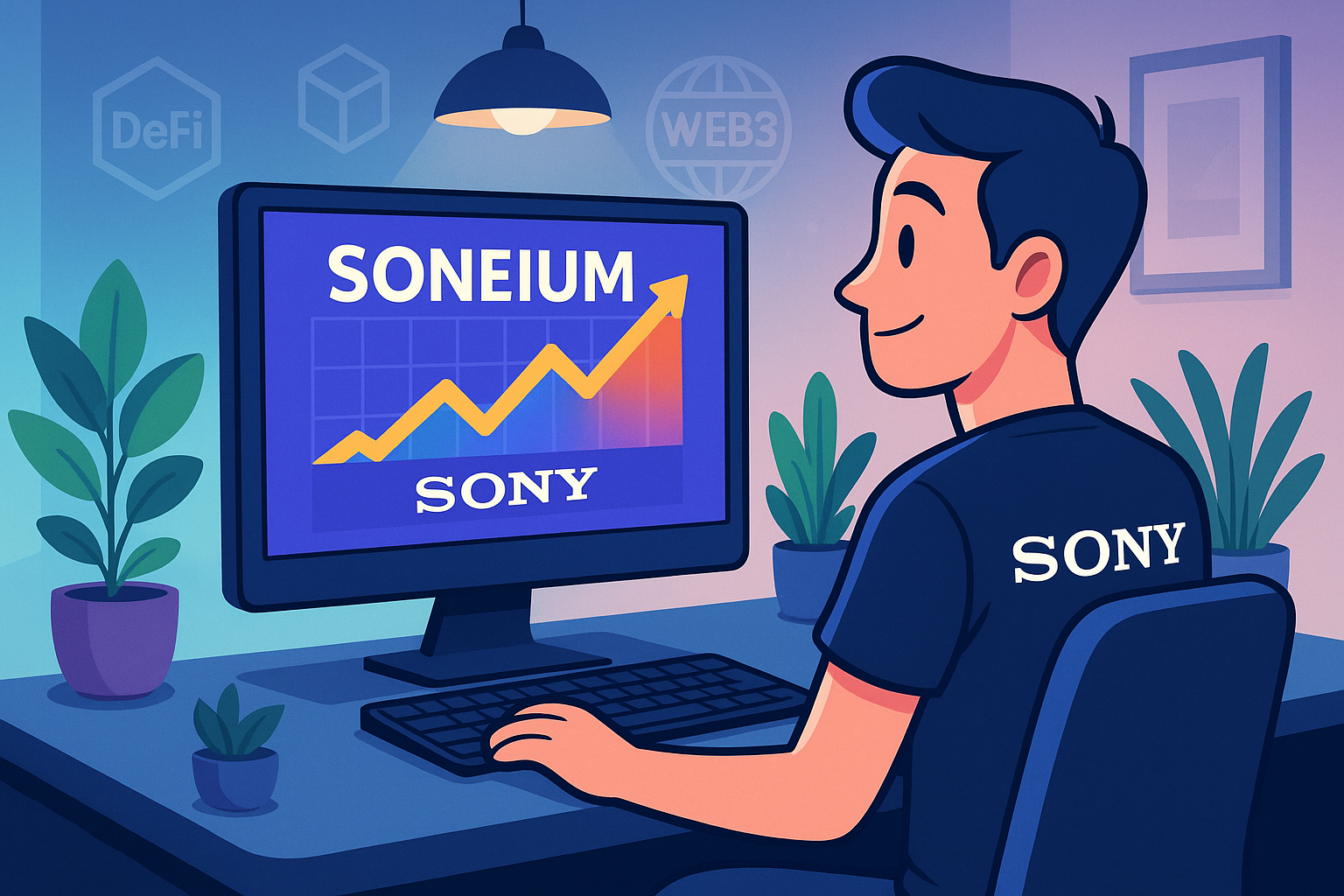
Sony’s blockchain network has seen a 10x surge in its monthly active addresses since February 2025 as user activity rises.


Soneium, an Ethereum layer-2 blockchain developed by Sony Block Solutions Labs, has seen a parabolic surge in network activity over the past 90 days. Following its launch on January 14, 2025, the Soneium Minato testnet recorded over 47 million transactions, engaging more than 14 million active addresses.

The joint venture project between Sony, under Sony Block Solutions Labs and Startale Labs, is gaining traction, deploying over 834,000 smart contracts alongside 89 million transactions in Q1. According to Token Terminal data, the network has seen its active addresses surge 10x since February 2025.


Source: Token Terminal

The network aims to provide scalable, developer-friendly blockchain infrastructure by leveraging Optimism’s OP Stack to boost transaction speed and minimize fees. Integrations with platforms like Uniswap enable users to swap, bridge, and provide direct liquidity from the Uniswap Web App and wallet.

Soneium’s emergence is Sony’s strategic move into the Web3 space as blockchain adoption gains ground. The company aims to bridge traditional digital experiences with emerging decentralized technologies through this network.

Happy
0 0 %
Sad
0 0 %
Excited
0 0 %
Sleepy
0 0 %
Angry
0 0 %
Surprise
0 0 %

TRON Achieves 99.7% Block Efficiency Boosting its Reliability

1 0
Read Time:52 Second

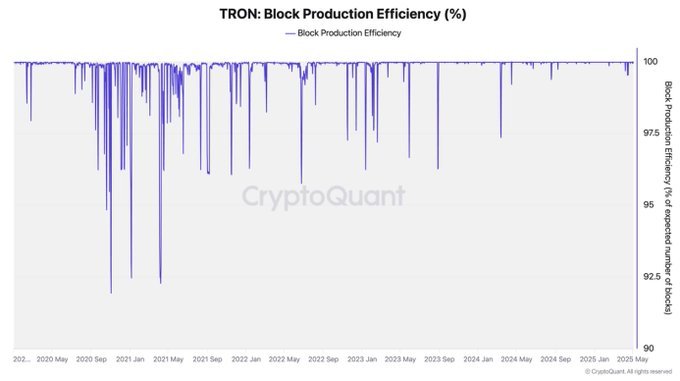
TRON blockchain on-chain data hints at optimum efficiency at 99.7%, suggesting that it is becoming one of the most reliable decentralized blockchains.


Blockchain efficiency measures how consistently a blockchain network can create new blocks without random failures or delays, reflecting its ability to handle transaction demand.  TRON has been working on its blockchain network since 2020, replacing its Super Representatives. The optimized efficiency level will ensure fewer delays and a better user experience fueled by consistent block production.


Source: X

According to the chart by Cryptoquant, TRON has hit 99.7% block production efficiency. With this development, the network has replaced 68% of its Super Representatives, signalling high reliability throughput for dApps and DeFi operations.

Additionally, TRON has improved in the decentralization aspect, distributing more power across the blockchain network. With such developments in place, TRON is solidifying its stance as one of the most dependable platforms in the crypto space, especially among developers in need of uptime and scalability.


Happy
0 0 %
Sad
0 0 %
Excited
0 0 %
Sleepy
0 0 %
Angry
0 0 %
Surprise
0 0 %

Federal Reserve Withdraws Crypto Guidance for Banks-Impact on Market?

1 0
Read Time:54 Second

The United States Federal Reserve has withdrawn its crypto guidance for banks, signalling the current administration’s shift toward an innovation-friendly future.


Crypto enthusiasts are anticipating a major market boom filled with creativity, innovation, and favourable policies following the latest developments in Trump’s administration. The United States Federal Reserve has announced its official withdrawal from guidance on crypto and dollar activities for banks.

According to the official announcement;


…These actions ensure the board’s expectations remain aligned with evolving risks and further support innovation in the banking system.


This comes as a surprise, but also a strategic shift within the U.S government’s approach to crypto-based innovation. It is a reflection of the growing openness and support for digital finance as a potential industrial revolution aiming to transform traditional finance.

As crypto adoption gains wider ground, the market is yet to see a huge capital inflow from traditional investors diversifying into Defi and blockchain projects in the coming months. Regulatory clarity is a necessity for the market’s growth and crypto adoption in everyday life.


Happy
0 0 %
Sad
0 0 %
Excited
0 0 %
Sleepy
0 0 %
Angry
0 0 %
Surprise
0 0 %

What are Smart Contracts in Web3?

1 0
Read Time:59 Second

Modern businesses are integrating smart contracts in their daily operations to enhance trust and transparency. So, what are smart contracts and why do they matter?


Smart contracts refer to digital agreements powered by blockchain technology. Traditionally, a contract is written on paper or a digital document requiring manual execution by parties such as lawyers and banks. People trust that these centralized parties will stand by the truth at all times and not violate the terms of the contracts.

Blockchains can store immutable data in a decentralized and transparent manner. A contract involves any agreement between two parties that is executed when the conditions are met. For instance, making a bet on a certain event or trading a commodity. They enable the smooth running of activities by web3 users.


The bet or trade agreement is stored as code on the blockchain, data that nobody can change. With a combination of Decentralized Finance (DeFi) and other execution technologies, the terms of the smart contracts are executed automatically when due. Many smart contract platforms are built as Layer 2s on the Ethereum blockchain. However, others like Solana, BNB Chain, and Avalanche are on the rise.


Happy
0 0 %
Sad
0 0 %
Excited
0 0 %
Sleepy
0 0 %
Angry
0 0 %
Surprise
0 0 %

What is Web3 in Blockchain Technology?

1 0
Read Time:1 Minute, 0 Second

Web 3 promises a decentralized future and is set to grow steadily, hitting USD 6.06B by 2030.


Internet has been on a constant evolution since its birth in the mid-90s. Web 1 was a read-only internet version, where users could only consume information. Web 2, the current version, includes social networks and apps that allow users to read and interact with information.

However, big tech corporations tend to store user data and can use it without the user’s permission. Web 3, the next generation of the internet, lacks centralized databases. Users own their data and can operate with privacy backed by blockchain technology. According to Mordor Intelligence, Web3 is projected to grow from $1.04 billion over the next five 5 years to 6.06 billion by 2030.


Source: Mordorintelligence.com


Web3 utilizes blockchain technology in powering decentralized finance(DeFi) and ownership of digital assets such as NFTs. With notable players such as Chainlink, Polygon, and Amazon backing the growth of web3, the market has seen a 42.3% compound annual growth rate (CAGR). This is indicative of rising interest and web3 adoption.

Happy
0 0 %
Sad
0 0 %
Excited
0 0 %
Sleepy
0 0 %
Angry
0 0 %
Surprise
0 0 %

What are Layer 2s? All about Ethereum Blockchain Scaling

1 0
Read Time:58 Second

Ethereum Layer 2s have reduced transaction costs while accelerating network speed. This is significant in boosting the adoption of blockchain technology.


Bitcoin pioneered the use of blockchain technology in modern life. However, transaction speed and costs became a huge barrier to integrating the coin in daily transactions as the number of blocks increased. Later, Ethereum came to extend the utility of blockchain technology beyond just payments.


With many projects happening on the Ethereum blockchain, high gas fees and slow transaction speed have also become a challenge. The concept of Layer 2s was born to solve this. Layer 2s are side blockchains that handle bulk transaction “rough work” off the main Ethereum blockchain. They submit final results to the Ethereum blockchain, thus reducing the pressure it could have faced doing all the work alone.


So, what are the trends in layer 2s?

Layer 2s like Optimism, Arbitrum, and zkSync use diverse technologies to speed up transactions and optimize costs. They help Ethereum be faster and secure while boosting its usage and adoption. As of today, many DeFi, NFTs, and gaming developers are building on top of Ethereum for optimal performance.


Happy
0 0 %
Sad
0 0 %
Excited
0 0 %
Sleepy
0 0 %
Angry
0 0 %
Surprise
0 0 %
Exit mobile version